


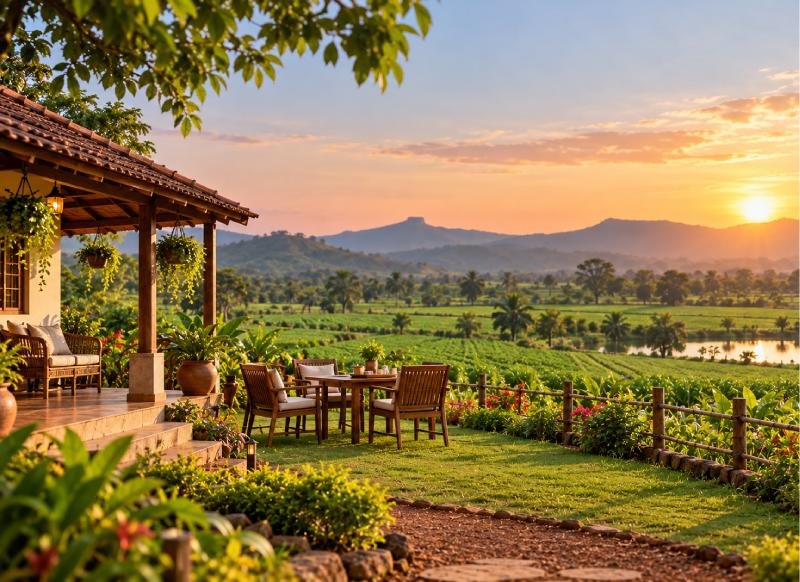
Maharashtra’s countryside offers something that city life often lacks—open spaces, farms, fresh produce, local food and a closer connection with nature. As travellers increasingly look beyond conventional hotels and resorts, agri tourism Maharashtra is emerging as an interesting way to combine agriculture with rural experiences.
For farmland owners, agri-tourism can create an additional use for agricultural property while giving visitors an opportunity to experience farming, village life and nature. The Maharashtra Tourism Department officially recognises agri-tourism as an agricultural allied activity and has a dedicated Agri-Tourism Policy. (Maharashtra Tourism)
What Is Agri-Tourism?
Agri-tourism brings visitors onto agricultural properties to experience farming and rural life. Unlike a conventional resort, the farm itself is part of the attraction.
Depending on the property and applicable permissions, a visitor experience could include a farm stay, plantation walks, seasonal harvesting, local food, nature activities, animal-related experiences, traditional games, village activities or educational farm visits.
The objective is not simply to build accommodation on farmland. The agricultural character of the property should remain central to the experience.
Why Agri-Tourism Is Growing in Maharashtra
Maharashtra has a diverse rural landscape, from the Western Ghats and hill regions to fruit-growing areas and traditional farming communities. Its proximity to major cities such as Pune and Mumbai also creates opportunities for short breaks and weekend getaways near Pune.
The state government’s tourism policy specifically promotes agri-tourism and rural development, while its broader tourism objectives include sustainable, community-based and rural tourism. (Maharashtra Tourism)
For an investor or farmland owner, this creates an opportunity to think beyond land ownership and explore how a property can provide meaningful agricultural and recreational experiences.
What Can a Farm Experience Include?
A successful agro tourism property does not necessarily need elaborate infrastructure. The experience can be built around what the farm naturally offers.
Farm-to-Table Experiences
Visitors can learn where their food comes from by participating in seasonal harvesting, understanding crops and enjoying locally prepared meals.
Plantation and Nature Walks
Fruit orchards, plantations, farm trails and surrounding natural landscapes can become part of the visitor experience. Guided walks can introduce guests to local crops, trees, birds and farming practices.
Farm Stays
A carefully planned farm stay can offer visitors a quieter alternative to conventional accommodation. Depending on the applicable rules and approvals, accommodation may range from rooms to certain permitted temporary or eco-friendly structures.
Family and Educational Activities
Families and school groups can participate in age-appropriate agricultural activities, traditional games and educational visits. Maharashtra’s earlier Agri-Tourism Policy specifically included educational visits as part of the framework for agri-tourism centres. (Maharashtra Tourism)
Local Culture and Food
Traditional Maharashtrian meals, local produce, handicrafts and village-based activities can make a rural tourism experience more distinctive while potentially creating opportunities for surrounding communities.
What Farmland Owners Should Check Before Starting
Turning farmland into a visitor destination requires more than creating a farmhouse and advertising it online. Owners should first understand the applicable tourism, agricultural, construction, safety and local requirements.
Maharashtra currently provides a formal registration route for agricultural tourism through the Directorate of Tourism. (Maharashtra Tourism)
The state’s tourism policy also provides specific recognition and incentives relating to agri-tourism. The 2024 tourism policy states that agri-tourism businesses are recognised as agricultural allied businesses and provides for an agri-tourism licence following verification by the competent authorities. (Maharashtra Tourism)
Owners should therefore verify:
- Whether the property qualifies under the applicable agri-tourism framework
- Land ownership and agricultural records
- Applicable local permissions
- Construction and accommodation requirements
- Water and sanitation arrangements
- Electricity and waste-management requirements
- Food-service and safety requirements
- Insurance and visitor-safety considerations
- Registration requirements with the relevant authorities
Rules and eligibility can change, so owners should confirm the current requirements with the Maharashtra Directorate of Tourism and relevant local authorities before beginning development.
Agri-Tourism vs a Conventional Farmhouse
It is important to understand the distinction.
A farmhouse may primarily be intended for private use by the landowner. Agri-tourism, on the other hand, involves welcoming visitors and providing an organised tourism experience connected to agriculture.
Simply owning agricultural land and constructing a private structure does not automatically make a property an agri-tourism centre.
The project’s legal structure, permitted land use, construction approvals and tourism registration should be evaluated before commercial visitor activities begin.
How to Plan a Weekend Farm Destination
Start with the farm rather than the infrastructure.
Ask what makes the property special. Is it an orchard? A plantation? Scenic terrain? A water body? Local food? Traditional farming? Its proximity to Pune? The strongest farm experiences usually come from the property’s genuine agricultural and natural character.
Next, define your target visitors—families, corporate groups, school students, couples, photographers or people looking for a peaceful weekend break.
Then plan the visitor journey: arrival, parking, welcome, farm activity, food, recreation, accommodation if applicable and departure. Basic facilities such as clean drinking water, sanitation and safe access are essential.
Finally, calculate the operating costs before investing in infrastructure. Staffing, maintenance, utilities, landscaping, security, cleaning, marketing and visitor management can all affect the economics of the project.
Can Agri-Tourism Add Value to Farmland?
Potentially, yes—but it should not be viewed as a guaranteed income model.
The viability of an agri-tourism project depends on location, accessibility, visitor demand, agricultural activity, infrastructure, operating costs, seasonality and regulatory compliance.
For farmland owners near established urban markets, a well-planned weekend experience can create an additional dimension to the property’s use while supporting rural tourism and local economic activity.
Building a Rural Experience, Not Just a Weekend Property
The appeal of agri tourism Maharashtra lies in authenticity. Visitors are increasingly interested in experiences rather than simply another room for the night. A working farm, local food, plantations, nature and genuine rural interaction can offer something that conventional hospitality properties cannot easily replicate.
For farmland investors considering future possibilities, this makes agri-tourism worth exploring—but only after confirming the property’s legal status, applicable permissions and commercial feasibility.
Triearth Venture’s focus on farmland and managed agricultural opportunities reflects the broader interest in combining land ownership with productive and experience-led uses. For anyone considering farmland in Maharashtra, understanding both the agricultural potential and possible future uses can help make a more informed decision.
Own the land first. Understand its possibilities next. Build only after the legal and practical framework is clear.
Disclaimer: This article is for general educational purposes and is not legal, financial or investment advice. Agri-tourism permissions, land-use conditions, construction requirements and eligibility may vary by property and location. Always obtain independent professional advice and confirm current requirements with the relevant Maharashtra authorities before developing or commercially operating an agri-tourism property.